Challenge:A mid‑sized manufacturer relied on hand‑written notes, spreadsheets and verbal updates to track job orders, inventory and production. The lack of visibility led to delays, missing parts and inefficiencies.
Responsibilities: Conducted stakeholder interviews and floor observations; mapped current workflows; defined user roles; created personas; designed mobile and desktop interfaces; built prototypes; facilitated usability testing and iterative design reviews with operators and managers.
Usability & Business Impacts
Reduced job-tracking time by 80%
Significantly reduced job-tracking time by digitizing order and inventory workflows, teams reported faster access to key job data and fewer delays on the floor.
Cut shipping errors by 20% – 30%
Operators reported fewer shipping and labeling errors after adopting QR-code-based labeling and real-time scanning.
Increased order visibility
Introduced real-time order visibility, allowing managers to track jobs and labor hours more efficiently, with fewer interruptions or manual check-ins.
Eliminated paper logs
Replaced paper logs with digital scanning and sign-in tools, enabling smoother tracking and setting the stage for future process scaling.
Overview
A mid-sized manufacturer came to us with a problem: they had no software to track orders, inventory, or production. Everything was manual; Shipping slips, sharpie markings on metal panels, and verbal updates. They needed a custom platform that could digitize workflows, improve accountability, and give visibility across the factory floor.
The Problem
The manufacturer was facing growing inefficiencies:
Machine operators wrote numbers on parts with markers
Shipping was managed using printed slips and spreadsheets
Managers couldn’t track job status or labor hours
No digital way to manage or measure operations
This led to missed deadlines, lost parts, and a lack of visibility into daily operations.
Research + Discovery
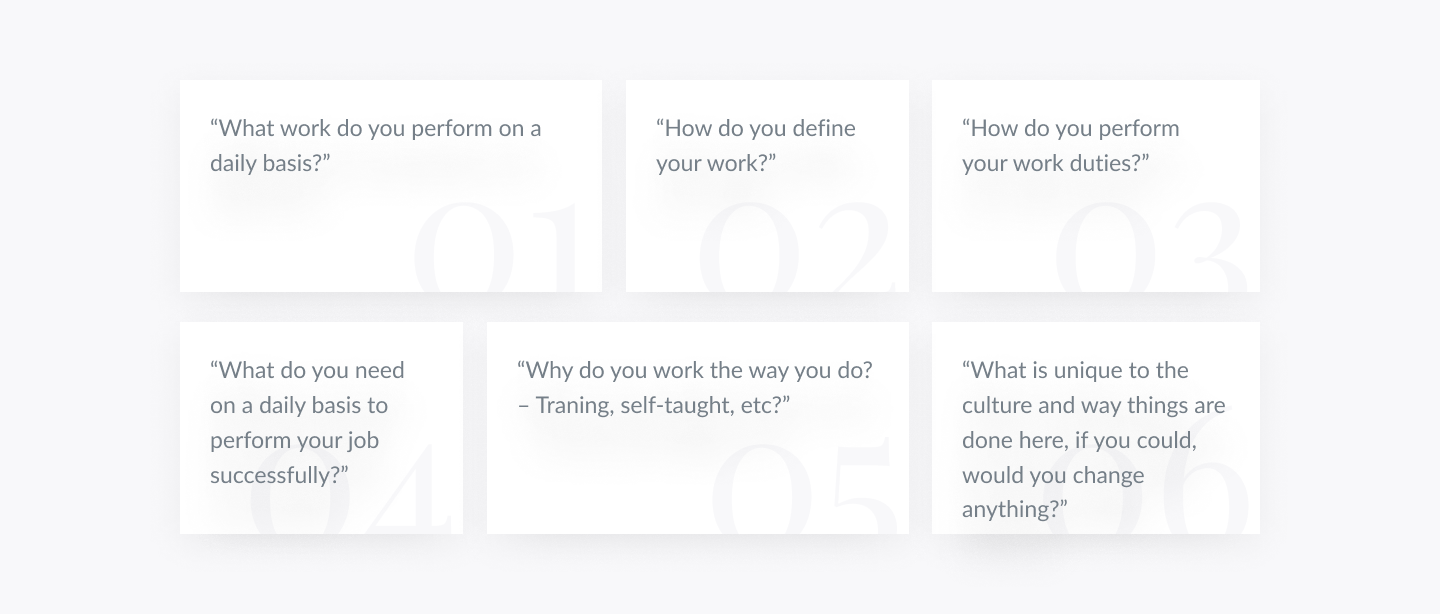
We started by observing how operators and managers worked on the floor. I interviewed them to understand their routines, tools, and frustrations. We documented:
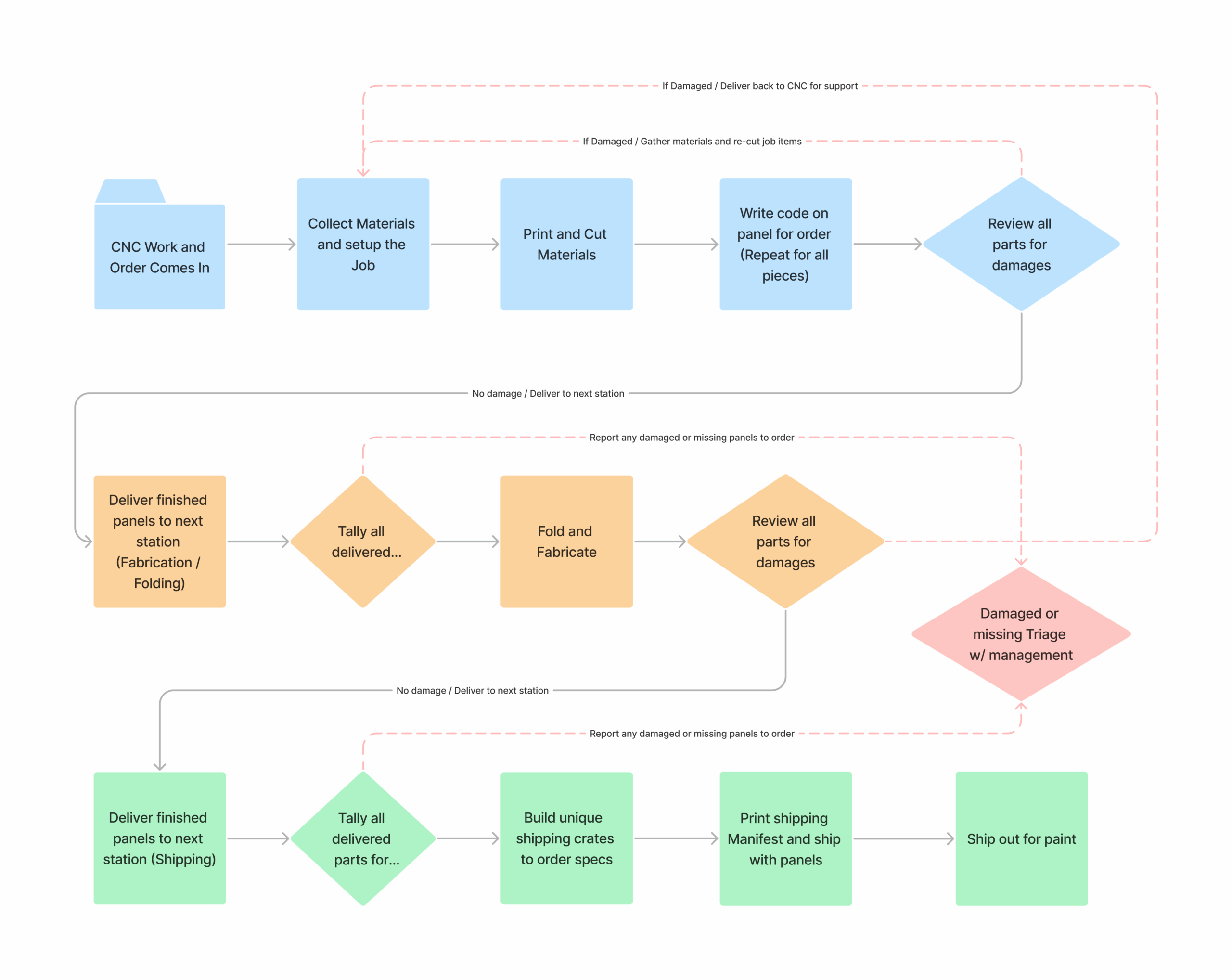
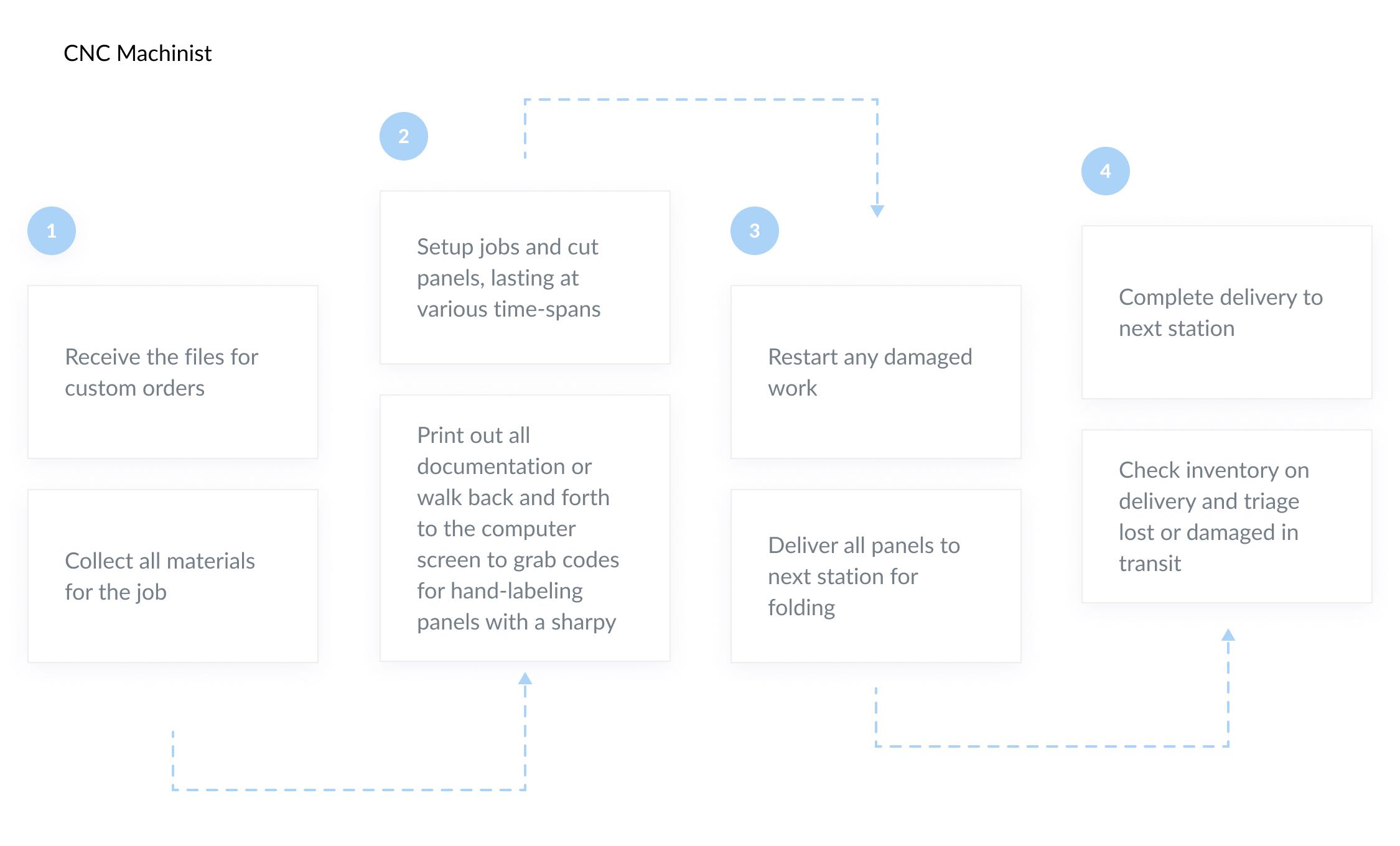
How jobs moved from machine to machine
How inventory was stored and retrieved
Where information was lost or delayed
We used these insights to define workflows and create user journeys.
I collaborated with stakeholders to map each core process: cutting, fabrication, packaging, shipping, and tracking. This helped align everyone around how work should flow, and where the blockers were.
Personas
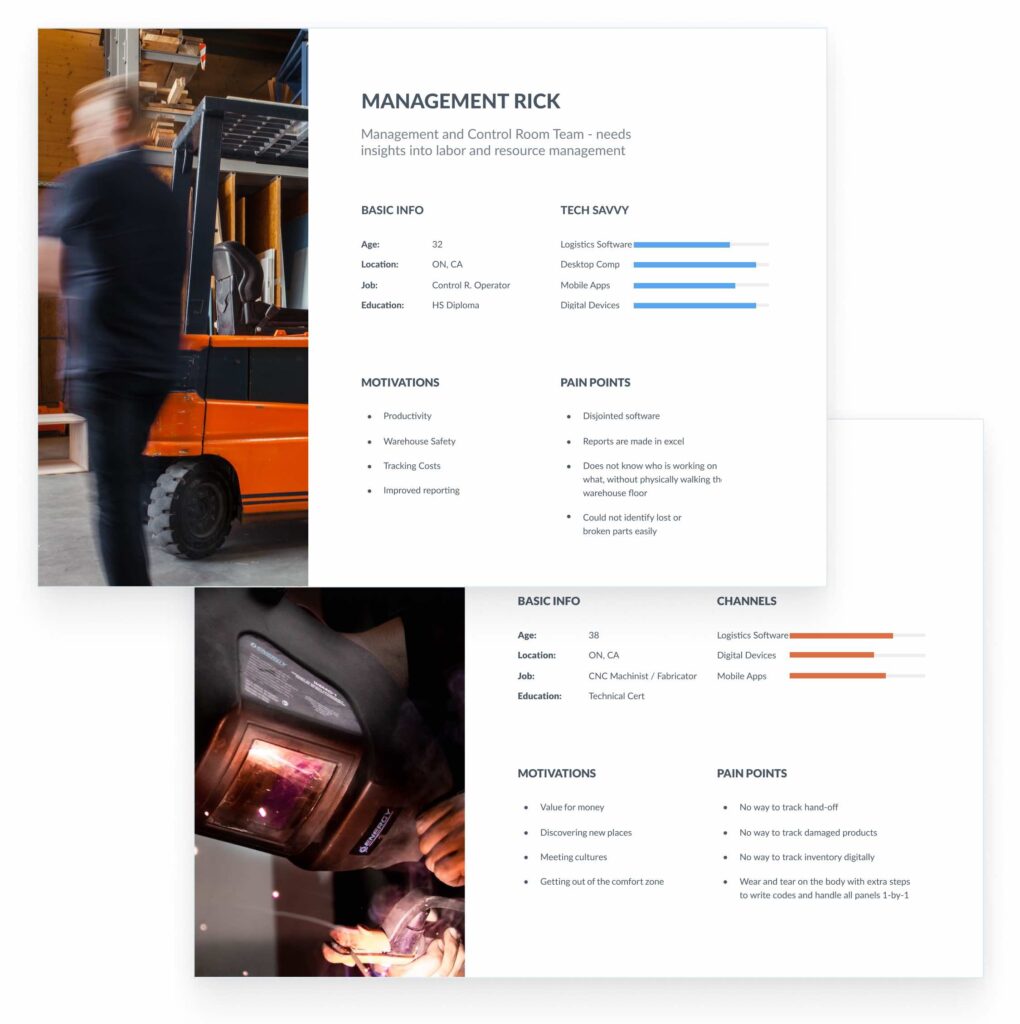
We developed 2 primary personas:
The Operator: needs a fast, simple way to log job progress
The Manager: needs visibility into production and labor
These personas guided our design decisions throughout.
Management Rick & CNC Chris
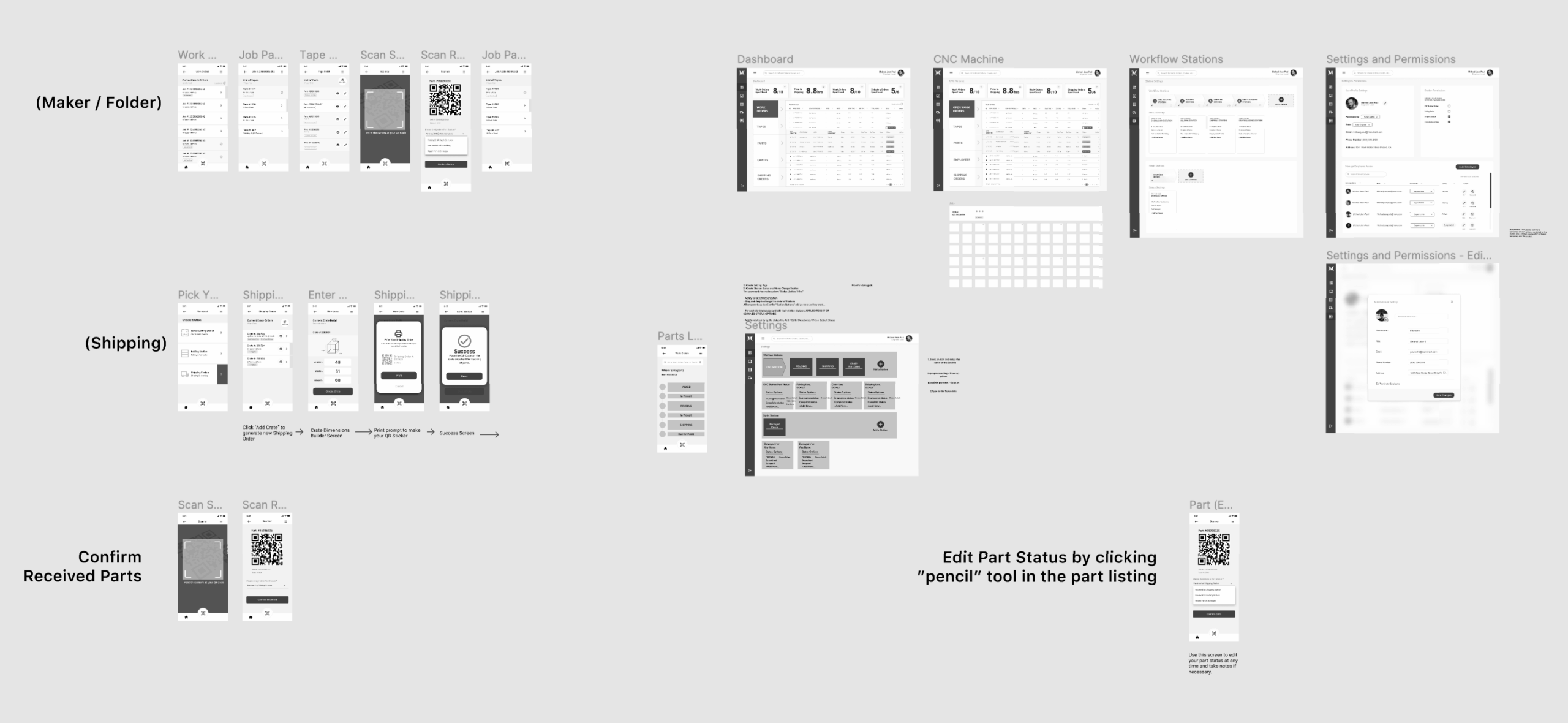
Mid-Fi Wireframes
Wireframes & Prototypes
I designed wireframes for both mobile and desktop. Key features included:
QR code generator and scanner
Real-time job tracking
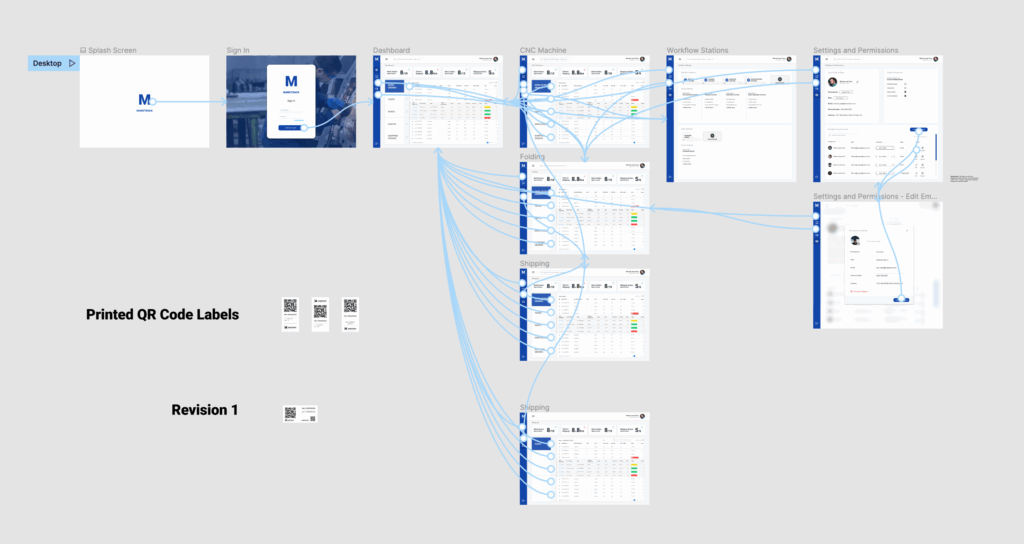
Admin dashboard with live job status
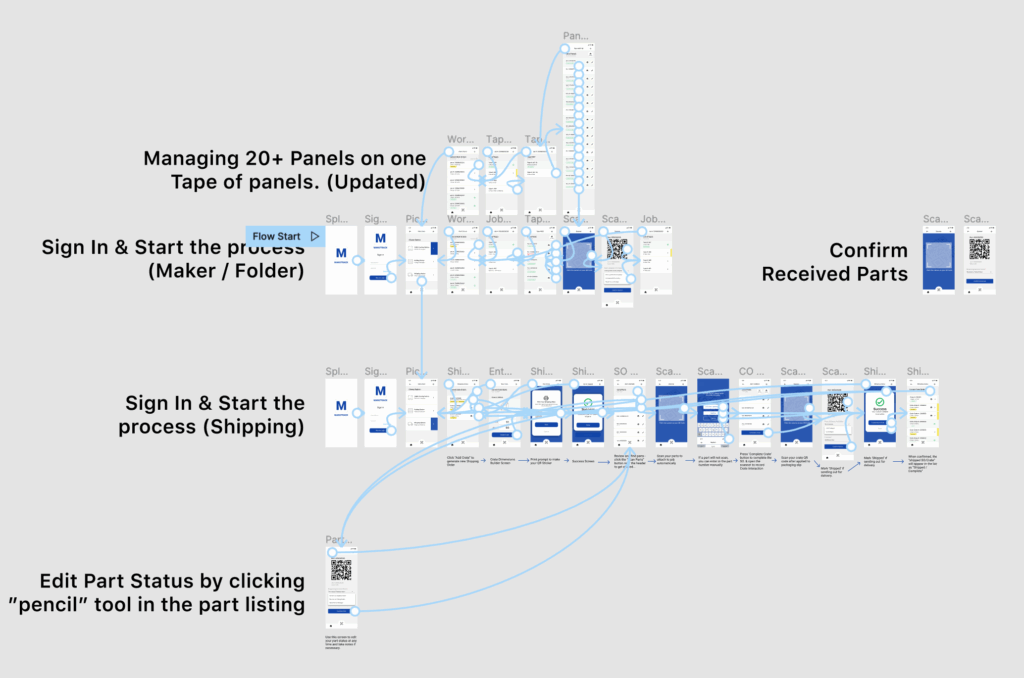
Mobile interface for operators to scan and update parts
We tested early versions with operators on the floor to make sure the tools were intuitive and fast.
Desktop Prototype
Mobile App Prototype
Implementation & Conclusions
Overall, this project was complex due to its moving parts for our core user groups and several disjointed and inadequate technologies.
The biggest challenge was figuring out how to honor, celebrate, and sunset their past processes while introducing change. To do that, we kept the end-users close while iterating on designs, and we regularly held stakeholder meetings to keep the decision-makers in the know. Transparency and communication allowed us to have conversations early and often to positively effect change and introduce new ways of thinking about how to get work done.
Added Technologies:
Mobile Application
Integrated QR-Code Printers
WHM, Web-based Software
Outcomes
The implementation process went smoothly, as the teams and management already had a clear idea of what was to come. In addition, training took place for leadership to empower them as super users to support and train others.
The Mobile App and QR Code Scanning not only allowed us to track parts and panels better for the main application, but it cut down on the physical effort needed on behalf of the operators on the warehouse floor.
The operators took to the mobile app quickly, and all station operators adopted the QR code processes for panel inventory with little to no resistance. (Reducing the friction) They were pleased to no longer rely on a marker and piece of paper to check codes against.
The ability for operators to sign in and use the mobile application also allowed the management teams to keep better track of resources on the floor, which supports better safety and efficiency outcomes.
There is still work to be done, but the mobile app, desktop application, and QR code printers have improved the business output, work/labor processes, and logistics tracking capabilities.
After rollout:
Operators stopped using markers and paper logs
Managers tracked jobs in real-time
Inventory was organized and searchable
Downtime and lost parts were drastically reduced
Teams were able to scale up without adding chaos
What I Learned
Even the most analog environments are ready for digital tools, if you meet people where they are. Listening to users early on helped us build something they actually adopted. And staying close to the floor throughout design kept the system simple and effective.