

Project at a Glance
Role: Lead On-Site UX Researcher & Service Designer
Methods: Service Design, Service Blueprinting, Field Observation, Stakeholder Interviews, Operational Analysis
Format: On-site immersion (live facility walkthroughs with staff and visitors)
Overview: As the lead on-site researcher, I conducted in-person walkthroughs, observed guest and staff behaviors, and documented service breakdowns across multiple entry points.
These insights were synthesized into a comprehensive Service Blueprint that unified guest experience, staff roles, operational dependencies, and ownership gaps into a single, shared view. The artifact was designed to help leadership align on reality before advancing to future-state planning or tooling.
Challenge: Hospital visits are already stressful. Unclear signage, ongoing renovations, fragmented touchpoints, and diffuse process ownership were compounding that stress during arrival—creating confusion at the very start of care.
This work focused on documenting the real arrival experience from parking through check-in, identifying where friction, silence, or misalignment emerged across people, processes, and environments.
“We didn’t see the need for more signage.
We identified the need for the right signs, in the right places, owned by the right people.”
Key Objectives:
Capture the end-to-end arrival experience from parking through check-in
Identify breakdowns in wayfinding, communication, staff interaction, and process clarity
Surface ownership gaps across teams and touchpoints
Deliver a clear, system-level Service Blueprint to inform experience improvement
Key Outcomes
Identified 12+ systemic friction points impacting visitor trust, timing, and orientation
Delivered a high-impact Service Blueprint that became a shared reference for CX and Operations decision-making
Revealed coordination gaps between Security, Experience, and Facilities affecting consistency at arrival
Research Approach

1. On-Site Walkthroughs
Visited and mapped guest entry points across the campus during peak and off-peak hours.

2. Observational Fieldwork
Shadowed visitors to observe moments of hesitation, confusion, or assistance-seeking.
3. Stakeholder Conversations
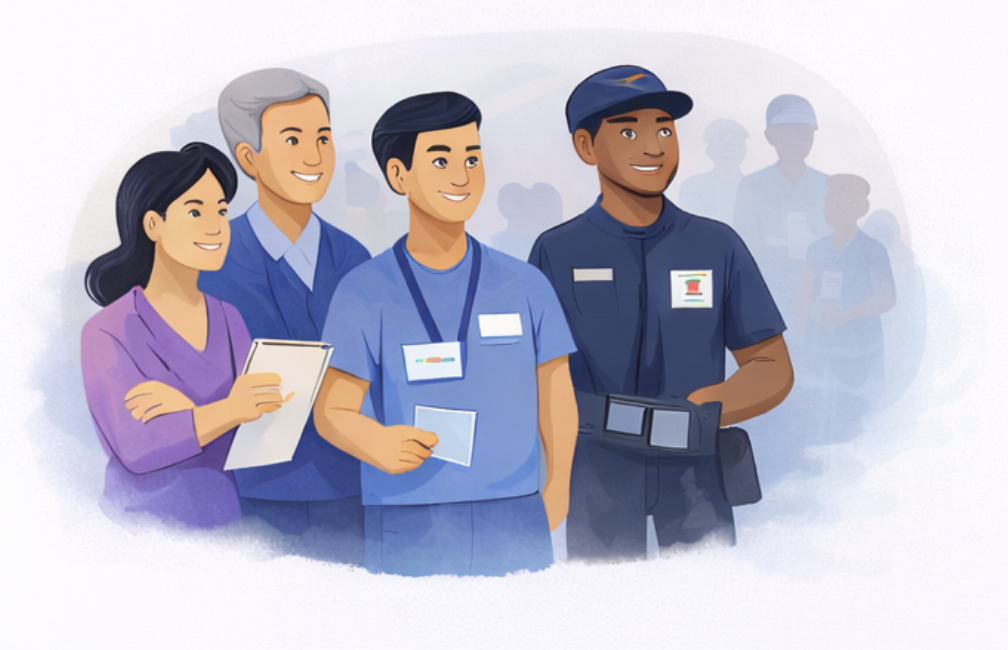
Spoke with front-line staff, volunteers, and team leads to document the “intended” vs. actual experience.
4. Service Blueprint Creation
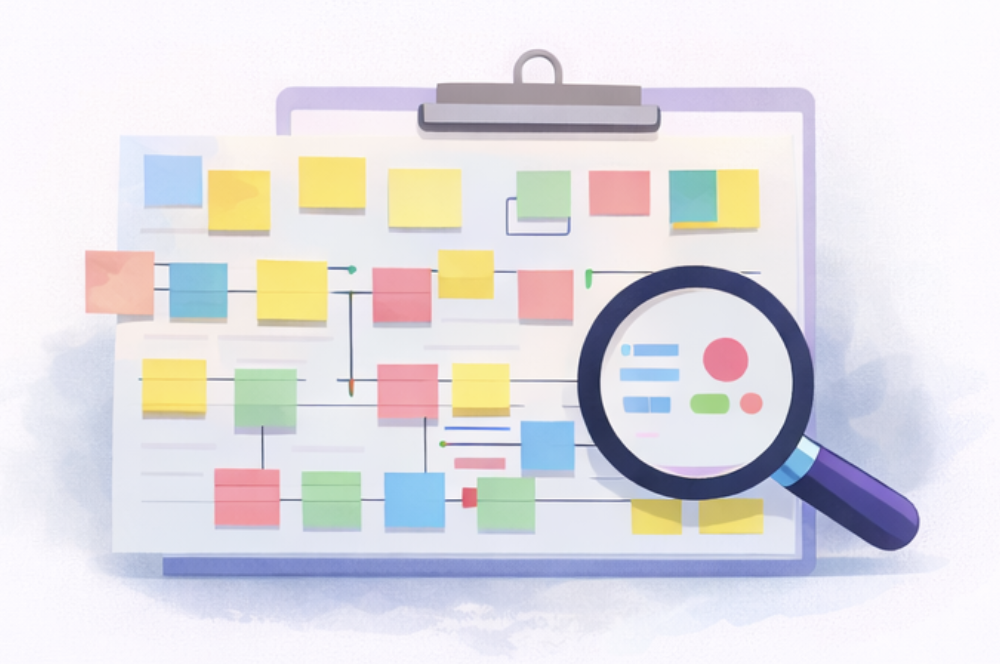
Synthesized all data into a visual Service Blueprint, reviewed and refined through iterative feedback with leadership.
What we Observed
Inconsistent wayfinding and signage across buildings and departments
No clearly defined ownership of the end-to-end guest welcome experience
Visible guest hesitation and uncertainty at key arrival moments
Staff improvisation compensating for process and system gaps
Organizational silos creating inconsistent care and trust signals
End-to-End Arrival Experience
Hospital arrival is not a single moment, it’s a system.
This work examined the full arrival experience across facilities, from first contact through check-in, to understand how guests navigate space, information, and uncertainty at the very start of care.
By studying real arrival behaviors in context, this research surfaced how environmental cues, staff roles, tools, and handoffs collectively shape trust, confidence, and emotional reassurance before clinical care begins.
Service Blueprint
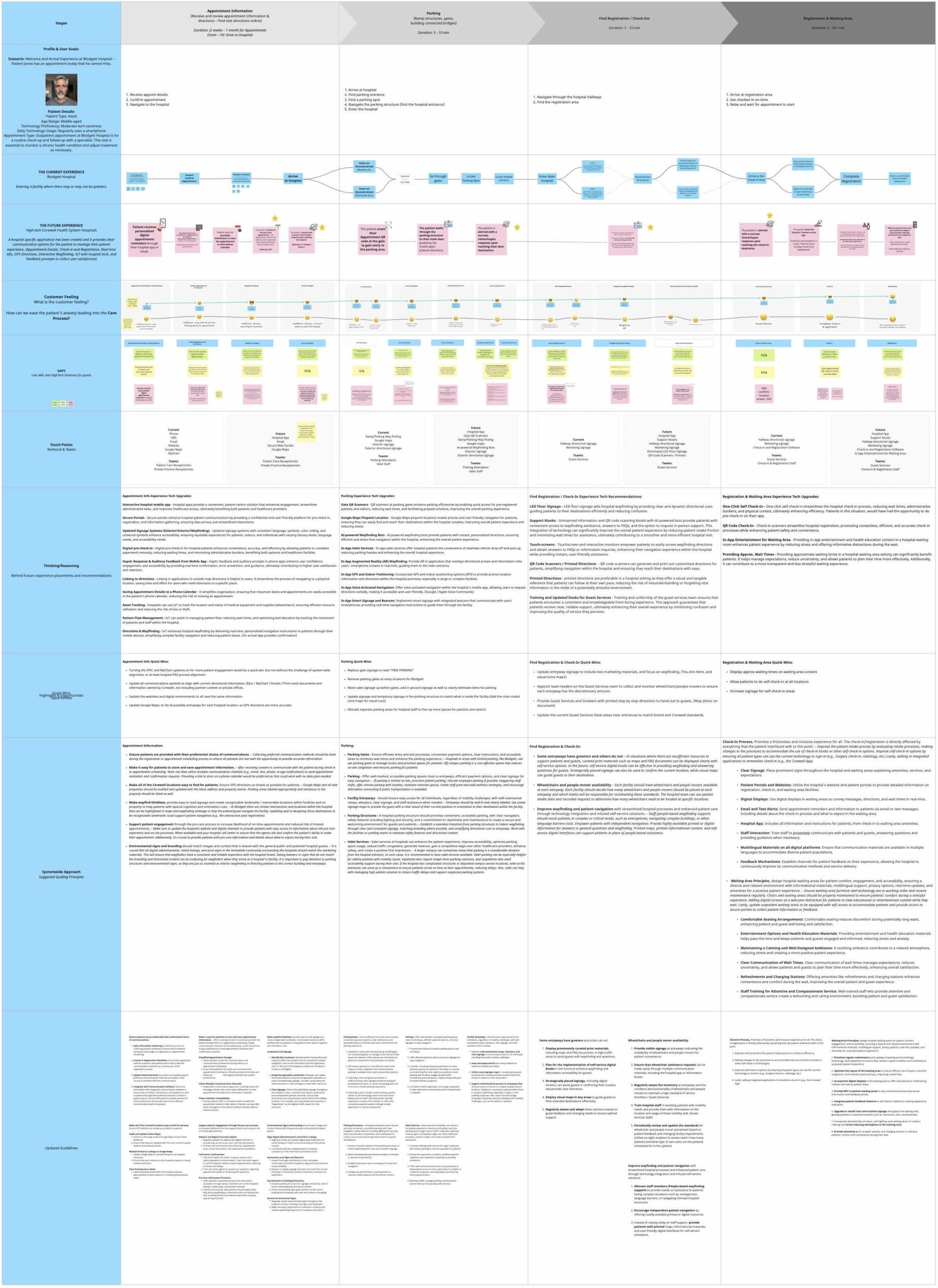
This service blueprint translates field research into a single, integrated view of the arrival system, mapping guest behaviors alongside staff roles, tools, signage, policies, and operational dependencies.
Rather than documenting individual breakdowns, the blueprint reveals where friction emerges from system-level misalignment across teams, environments, and processes.
The artifact served as a shared reference in workshops and working sessions, helping stakeholders align around the same reality before prioritizing improvements or exploring future-state solutions.
Outcomes
Produced a system-level Service Blueprint used to support CX, Operations, and Facilities discussions
Identified 12+ recurring friction points impacting visitor confidence, orientation, and timing
Clarified ownership gaps and handoff breakdowns across Security, Guest Services, Registration, and Facilities
Informed wayfinding improvements, greeter role clarity, and arrival communication standards
Contributed research inputs used to inform Corewell Health’s future journey-mapping and experience tooling
The work created a shared foundation for system-wide thinking about arrival, not just isolated fixes.
Reflection
This work reinforced that in complex environments like hospitals, experience quality is rarely a single design problem, it’s a systems problem.
The blueprint became a practical tool for helping teams see what guests experience end-to-end, how internal decisions surface at the front door, and where alignment matters more than optimization. By making the invisible visible, the work created space for more informed, cross-functional decision-making grounded in real conditions, not assumptions.